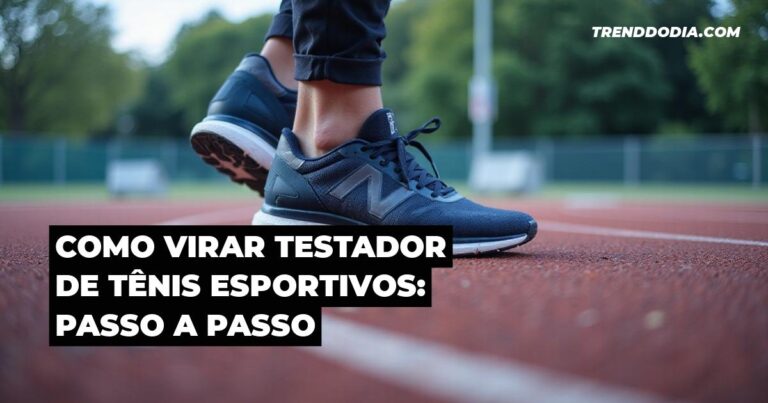
To choose the ideal running shoe for you, it's important to first consider your foot strike type, then the level of cushioning, the drop, the distance you usually run, the type of terrain, and how the shoe fits your foot. This way, you can avoid pain, reduce the risk of injury, and make running more comfortable, even if you're just starting out.
It turns out that many people buy shoes based solely on brand or promotion, and end up running in pain and losing motivation. You'll see step-by-step how to choose the right running shoes for your feet, your routine, and the type of running you do on Brazilian streets.
How to understand your foot type without complications.
Knowing your foot type is the first step in choosing running shoes that properly protect your feet. This type shows how you distribute your weight when you step, and this affects which model is ideal for you.
Therefore, you avoid common problems like knee or ankle pain. Many Brazilian runners who run on asphalt experience this, but analyzing your foot strike correctly resolves it quickly.
| Foot type | Features | Benefits of Wearing the Right Shoes |
|---|---|---|
| Neutral | Step on the center of your foot. | Medium support, ideal for light runs. |
| Prone | Step more inside | Control your foot strike to prevent internal wear. |
| Supinated | Step more on the outside | Extra cushioning on the outside |
For example, imagine a person in São Paulo looking at the wear on the sole of a used sneaker. If it wears more on the inside, they have pronated feet; if it's even, neutral; on the outside, supinated. This way, they avoid buying something in a store without knowing which model is right for them.
According to recent data, most Brazilian runners practice street running on asphalt and sidewalks, so knowing your foot strike is helpful in everyday life. Source: Strava (2024). In practice, it's worth testing right away. To always get it right, see How to Test Sneakers Before Buying and Always Get the Right Pair, with tips for comparing models at this stage.
Difference between neutral, pronated, and supinated foot strike.
A neutral foot strike means that the foot lands in the center when running, without tilting inward or outward. This keeps the run balanced, without excessive wear and tear on specific areas.
Pronated gait causes the foot to naturally roll inward, which can put more pressure on the knees if left uncorrected. However, good running shoes can alleviate this by providing lateral support.
How to do a quick at-home gait analysis.
To test this at home, wet your feet and step on a dry surface, such as paper or a clean floor. Then, observe the marks left by your foot and see if the weight is distributed in the center or to the sides.
You can also use an old pair of running shoes that you've run in a lot and observe how the sole has worn down. This simple method helps confirm the type without needing expensive tests.
Cushioning and drop: how soft does your running shoe need to be?
The cushioning in running shoes absorbs the impact of your foot on the ground, making running more comfortable right from the first pedal strokes. Therefore, choosing the right pair helps prevent joint pain.
Also pay attention to the drop, which is the difference in height between the heel and the toe of the shoe. In these cases, a smaller drop increases the feeling of agility, but a larger one can better protect against extra weight.
For example, a beginner runner in Belo Horizonte, who is overweight, chooses a shoe with high cushioning to run 5 km on a hard asphalt avenue. In this way, he feels less fatigue in his knees. To experience this in practice, run lightly in places where you can test it. Where to Try on Sneakers for Free: Easy Tips for You, comparing levels of softness without compromise.
Studies show that running shoes with the right cushioning reduce injuries in road races, protecting runners throughout Brazil. Source: CBAt (2023). So, focus on that before deciding.
When to choose softer cushioning
Choose softer cushioning if you are overweight or run on hard surfaces, such as hot Brazilian asphalt. This helps absorb bumps and prevents soreness early on.
But if you're an advanced runner, medium cushioning can provide more speed without sacrificing efficiency. Always test to see what suits your body best.
What is drop and how does it affect your run?
The drop is the difference in millimeters between the heel of the shoe and the insole. In short runs, a low drop keeps the foot closer to the ground, improving balance.
Conversely, a high drop, such as 10-12 mm, provides more comfort for long distances. However, beginner runners may feel more stable with 8-10 mm. This adjustment directly influences how you touch the ground.
What is the ideal fit for your running shoes?
The right fit in your running shoes prevents blisters and ensures your foot stays firmly in the midsole. This allows you to run without worry, even on hot days.
Besides wearing the right socks, the size matters to avoid squeezing your toes while running. Generally, the perfect fit leaves a small space at the front, but without being too loose.
Imagine someone in Rio de Janeiro, running along the beach, who always bought shoes that fit too tightly and ended up with purple toenails. Now, they leave a finger's width of space in the front and avoid running to the doctor. To confirm the fit, run for a few minutes and see if there's enough air. Then, programs in Brazil allow you to test them for days before buying, like in [insert example here]. Programs for Testing Tennis Shoes in Brazil 2025which makes it easier to decide.
Guidelines recommend about 1 centimeter of clearance at the tip to reduce friction and blisters during training. Source: ABOR (2023). So, take this into account when purchasing.
How to measure your foot the right way
To measure, stand up and mark your foot on a piece of paper, including your big toe and heel. Then, use a ruler to check the size and compare it to Brazilian shoe size charts.
By doing this in the afternoon, when your foot swells, you'll get the exact size. This simple step prevents you from buying the wrong size.
Comfort tips: socks, laces, and width.
Use synthetic fiber socks to absorb sweat and adjust the laces without tightening them too much. The ideal width should allow your foot to move freely without any slack.
However, if you have wider feet, prioritize models with more room. With these tips, running becomes more enjoyable in the Brazilian heat.
Terrain, distance, and pace: what kind of running do you really do?
The type of running changes everything: whether it's on the street, treadmill, or trail, the shoes need to match the terrain. Therefore, your choice protects your feet every day.
Next, consider distance and pace; short runs require a light approach, while long runs demand endurance. In these cases, evaluate your weekly stopwatch.
For uneven streets, like in Recife, a sturdy sneaker will do the job; trails require thick soles. And hard-paved terrain needs strong cushioning. So, adapt accordingly.
| Terrain/Distance | Tennis Characteristics | Brazilian Examples |
|---|---|---|
| Street (asphalt) | Medium cushioning, lightweight sole. | Use in São Paulo |
| Belt | Balanced drop, smooth traction | Gym workouts |
| Trail (short) | Thick sole, lateral support | Races in parks |
| (Long) street | High durability, medium weight | 10 km races |
For example, a runner in Recife trains 3 times a week on uneven sidewalks and competes in 10 km races on asphalt. She uses a robust street shoe, not a lightweight trail shoe. This method prevents injuries on the surfaces.
Approximately 2,800 road race events were registered in Brazil in 2024, focusing on asphalt. Source: Brazilian Association of Race Organizers (2024). Therefore, many are following this trend.
So, adjust to your pace: if you run slowly, choose more stable shoes; if you run fast, choose more agile ones. In other words, test and see what fits your stride.
Some runners become so interested that they want to become testers for different terrains. If that's you, check it out. How to Become a Sports Shoe Tester: Step by Step, with real ways to test models.
Difference between running shoes for the street, treadmill, and trail.
Street shoes have non-slip soles for asphalt, while treadmill shoes require less traction. Trail shoes, in turn, have a thickness suitable for mud and rocks.
For this reason, choose the street for most of your runs; it's better suited for average Brazilians with uneven sidewalks.
How to adjust your running shoes to your pace and goals.
If you have a light pace, look for comfortable shoes for longer distances. But if you go faster, a more responsive shoe will do.
Therefore, focus on the goal: a marathon requires endurance; a short training session requires lightness. This adjustment maintains motivation.
How much should you invest, and which models make sense for you?
Investing depends on your budget and how often you race. With a low budget, domestically produced models are a great option.
Therefore, calculate the cost-benefit: expensive running shoes are only necessary if you run a lot and have frequent injuries. Otherwise, you spend less and run comfortably.
Imagine a worker in Curitiba, earning minimum wage, running 3 times a week. He chooses a cheap, domestically produced model with good support, avoiding unnecessary high expenses.
The athletic shoe market in Brazil is expected to generate around R$21.6 billion in 2025. Source: Brazilian Association of Footwear Industry (2025). Along these lines, many affordable options are emerging.
When is it worth paying more for a pair of sneakers?
It costs more if you're an experienced runner who runs long distances and has chronic pain that a basic solution can't resolve. In that case, technology helps.
However, if you're a beginner, wait until you've mastered the basics first to see if you really need them.
Examples of popular models among Brazilians
Models like the Nike Pegasus or Adidas Ultraboost are popular for their cushioning and mid-range price. Other national brands, like Penalty, cost less and perform well.
Choose from reviews by Brazilian runners, testing retail. That way, you'll find the perfect one without making a mistake.
What precautions should you take after choosing your running shoes?
After choosing your shoes, monitor their lifespan so you can replace them at the right time. This prevents silent injuries from developing later.
In hot weather, like in Salvador, pay attention to the mileage: write it down in the app so you never go over the limit. With proper care, it lasts longer.
For example, a runner in Salvador logs 600 km on the app and switches gears before experiencing knee pain. This approach prevents hidden wear and tear.
Many experts recommend changing your cyclist every 500 to 800 km, depending on weight and terrain. Source: Brazilian Society of Exercise Medicine (2023). Therefore, take advantage of this.
Signs that it's time to replace it.
Signs include worn soles, sudden pain, or cushioning fading. At this point, don't ignore it.
Also, if wear and tear accelerates on Brazilian asphalt, get it checked right away. This precaution protects your health.
How to wear the same pair of shoes for longer without hurting yourself.
Rotate your running shoes, giving them rest days between runs. Also, clean them and store them in a dry place to preserve them.
But don't push it too far: when it loses efficiency, switching ensures continuity. With such habits, you'll run longer.
In short, choosing the right running shoes involves understanding your gait, getting the right cushioning and drop, adjusting the size correctly, considering the terrain, distance and pace, respecting your budget, and keeping track of your mileage so you can replace them when needed. With these steps, you can run pain-free.
Now, observe how your running shoes wear out today, note how your feet feel during your next runs, and leave a comment with questions or experiences about models you've used. This will help you choose better next time.