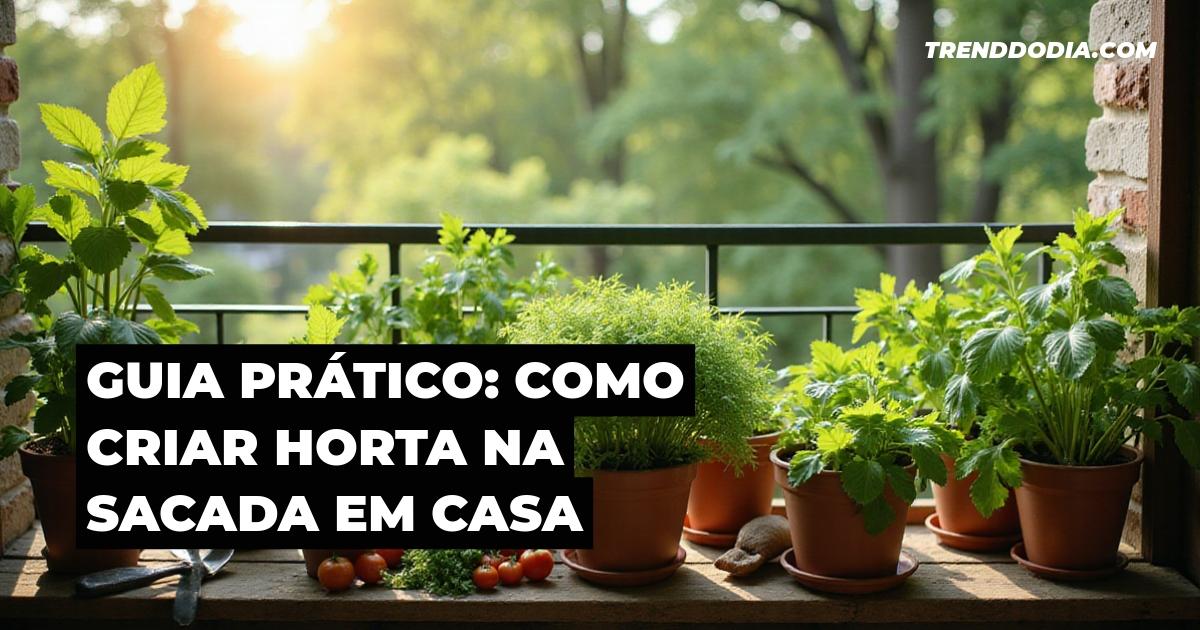
To create a vegetable garden on your balcony, you need a sunny spot, pots with good drainage holes, good potting soil, the right seedlings or seeds, and regular watering without overwatering. That way, you can harvest fresh herbs and vegetables right from your small apartment!
Many people make silly mistakes with their first plants: unsuitable pot, overwatering, or lack of sunlight. With simple tips and examples from Brazilian gardens, you can avoid these little problems and create a mini garden that produces well, spending little on a daily basis.
Step-by-step guide to setting up your balcony garden.
The first step to setting up your balcony garden is to assess the space you have available. Check if your balcony receives at least 4 hours of direct sunlight per day, as indicated by Embrapa in 2022. This allows plants to grow well without needing artificial light, which is expensive.
Therefore, choose the right pots with drainage holes. For example, imagine a resident of São Paulo with a 1.5-meter balcony, placing three inexpensive plastic planters with holes in the bottom. This type of container prevents water accumulation and helps prevent root diseases, you understand?
Next, prepare the substrate by mixing regular soil with sand or organic compost. This mixture allows the roots to breathe better, preventing them from rotting during the quick rains in cities like Rio or Porto Alegre.
In the final step, plant ready-made seedlings that you pick up at the local market. Start with chives, lettuce, and basil, as they are easy to care for. Then, maintain a daily checking routine for success. But don't forget to... How to care for plants in an apartment: practical tips To make your garden last longer.
Choosing the location and the pots for the balcony.
When choosing a spot on your balcony, opt for positions with partial shade on hot days. This prevents leaf burn, which is quite common in sunny regions of Brazil, such as the Northeast.
When it comes to planters, opt for those made of recycled plastic or inexpensive ceramic. These materials retain moisture without being too heavy to move in high-rise apartments. This way, you won't overload the balcony structure.
How to prepare the substrate and plant.
Prepare the substrate by mixing regular soil with organic matter, such as ground rice husks. This combination provides natural nutrients for fast-growing plants, like lettuce and arugula, in small balconies.
When planting, make holes the size of the seedling's roots and cover them carefully. First, place the seedling in the center of the pot, then press the soil around it to firm it. This way, it remains stable even in strong winds in coastal cities.
What plants should I choose for a vegetable garden on a small balcony?
Choosing the right plants depends on how much sun your balcony receives. For areas with at least partial shade, prioritize hardy herbs like chives and parsley, which adapt well to pots in urban environments, according to Embrapa Hortaliças in 2021.
For example, on a 1-meter balcony, place a pot with basil in the lightest part, a planter with lettuce and arugula in partial shade, and a medium-sized pot with mint in a less exposed corner. This makes the most of the limited space in practice.
Additionally, consider plants that grow tall to save space and avoid competing for light. Native Brazilian species, such as ora-pro-nóbis, thrive on hot, dry balconies in the countryside.
Easy seasonings to get started without fail.
Herbs like chives and hearts of palm grow quickly and require little care. You can harvest fresh leaves in weeks, ideal for those who live in apartments without time for complicated gardening.
Red basil, in turn, loves sunny balconies and attracts urban pollinators. These types tolerate climate variations, common in cities like Salvador or Brasília.
Vegetables that do well in pots
Vegetables like Creole lettuce thrive in deep pots, developing strong roots. They tolerate partial shade, adapting well to balconies shaded in the afternoon by neighboring buildings.
Arugula and spinach, in contrast, require less space and grow in tight rows. This allows you to take advantage of narrow pots, typical of small balconies in low-income apartment buildings.
How to take care of your balcony garden on a daily basis?
Taking care of the vegetable garden every day involves checking the soil moisture to avoid problems. Embrapa in 2020 recommends keeping the substrate slightly moist, preventing waterlogging which affects the respiration of the plant roots.
Let's consider the example of a resident in Belo Horizonte who waters early on hot days, tests the soil with her finger, and fertilizes every 30 days with humus. This simple method keeps the leaves green and flavorful.
Furthermore, watch for signs of rapid disease, such as yellow spots, so you can act quickly. This keeps production running without spending extra money on expensive chemicals.
Watering, fertilizing, and pruning made simple.
When watering, use tap water at room temperature to avoid shocking the roots. Water once a day during the Brazilian summer, adjusting according to the season to conserve water.
For fertilization, mix homemade compost with the substrate from time to time. This way, the plants absorb nutrients better, growing healthy. Then, do light pruning of old leaves to encourage new shoots.
How to deal with common pests on your balcony.
Pests like ants and aphids appear on urban balconies because of the wind. Use water and mild soap to wash the affected leaves, preventing serious infestation without harmful chemicals.
In cases of mealybugs, carefully scrape them off using a wet toothpick. This natural method protects the family garden, making everything sustainable and easy for beginners.
Tips for making the most of small balconies with little sun.
Making the most of small balconies involves thinking about vertical growth to gain space. Studies by Embrapa Solos in 2021 show that vertical gardens can increase the use of a tiny area by up to three times, perfect for compact apartments.
Example: A resident in Curitiba installs narrow wooden shelves on the balcony wall, uses cut-up PET bottles as inexpensive planters, and positions demanding plants on top. This optimizes local light and ventilation.
Therefore, adapt it to low sun conditions by using shade-loving plants, such as arugula and lettuce. This way, your garden will thrive even on north-facing balconies, common in older buildings in the Southeast region of Brazil.
Ideas for vertical and hanging gardens
Vertical gardens use supports attached to balcony railings. Hanging plastic bottles work well for herbs like ora-pro-nóbis, reducing the space they occupy on the floor.
Suspended structures prevent accidents caused by heavy loads on rainy days. This system also facilitates quick harvesting for residents with busy schedules.
Adapting the vegetable garden for a balcony with little sun.
For low-sunlight conditions, choose hardy varieties like dark arugula. They need less direct light, adapting to environments shaded by neighbors or trees.
Additionally, rotate the pots from time to time to balance sun exposure. This prevents the plants from becoming weak on one side, ensuring even and healthy growth.
Common mistakes in balcony gardening and how to avoid them.
Common mistakes include overwatering or incorrect positioning, which kill young plants. Technicians have been reporting since 2020 that overwatering causes death in potted plants, according to Embrapa in 2020.
Example: A resident in Rio first loses basil due to strong winds and overwatering; then adjusts the location and reduces the frequency, harvesting good leaves in the end.
However, ignoring pests leads to rapid total loss. Feeling the substrate before watering again prevents many simple problems.
Problems with water, sun and wind
Excess water causes root rot, a common problem in humid areas like Florianópolis. Water only when the soil is dry on the surface to resolve the issue.
Wind and heavy rain can knock over lightweight pots. Secure them to heavy bases or fasten them with strong ropes for safety during storms.
Pots, substrate, and fertilizer chosen incorrectly.
Pre-mixed substrates can be expensive and unsuitable. Mix local sand with manure for greater economy and efficiency.
Chemical fertilizers burn sensitive root vegetables like chives. Use organic fertilizers made from rotten fruit for natural and economical results.
How much does a balcony garden cost and how much does it produce?
The cost of a balcony garden varies depending on the materials used. Estimates from Embrapa in 2021 indicate a reduction of up to 301% in vegetable production costs, offsetting the initial investment for Brazilian families.
For example, a resident of Recife spends R$120 on pots and seedlings, harvesting lettuce, arugula, and herbs every month. This yields enough for home use without depending so much on the market.
By comparing different scenarios, you can see the difference between budget and premium options. This helps you plan without overspending, focusing on practical productivity.
Initial investment estimate
Basically, invest R$$50 in plastic pots and local seeds. This covers up to three square meters of balcony space, enough for someone starting from scratch.
For a medium-sized investment, consider adding vertical supports to the R$150. These extras increase efficiency in tight spaces, such as urban condominiums.
Average output you can expect
On small balconies, expect to harvest 5 bunches of lettuce per month initially. This grows with practice, ensuring gradual self-sufficiency for everyday seasonings.
Well-maintained vegetable gardens produce enough for daily salads. Then, review your budget to maximize future family savings.
In short, to have a vegetable garden on your balcony, choose the location carefully, use pots with drainage, prepare good substrate, select plants for the available sun, take care of watering and fertilization, avoiding mistakes such as overwatering or containers without holes.
Choose three plants today to start on your balcony, share the size and amount of sunlight the area receives in the comments, as well as any questions you may have so we can provide personalized planting suggestions.