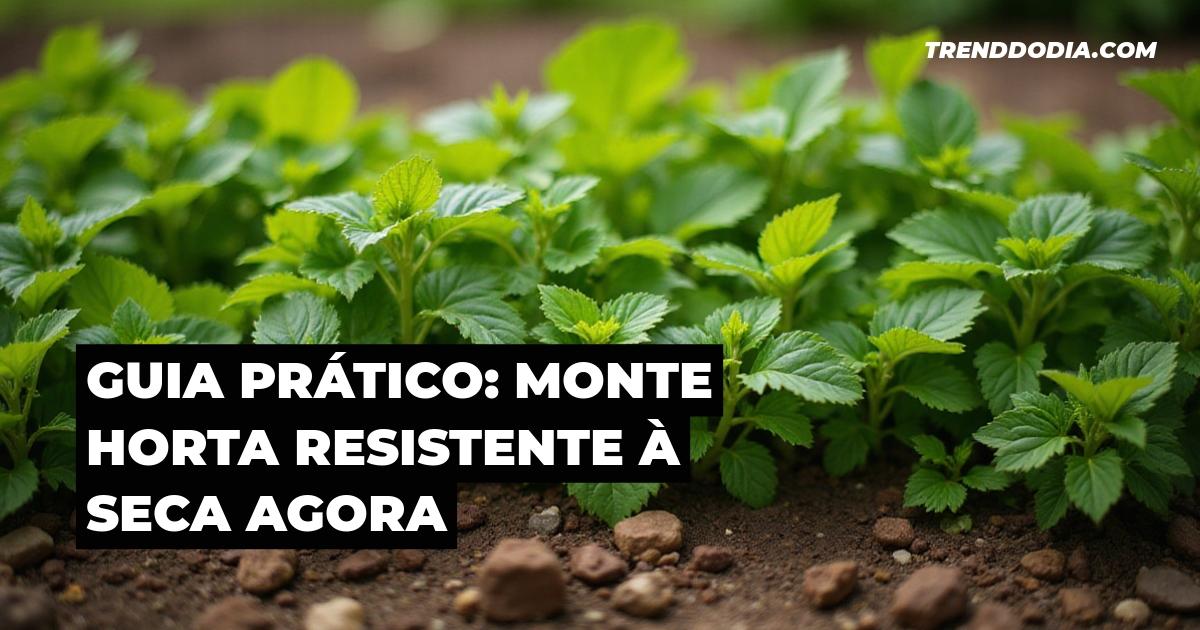
To create a drought-resistant garden, you combine three main things: well-covered soil, plants that tolerate heat, and an economical irrigation system, such as drip irrigation or rainwater harvesting. This way, you can harvest year-round while using significantly less water.
Many people give up on their vegetable garden after the first dry summer, thinking it's due to lack of skill. In reality, the problem is planning. You'll see how small adjustments to the soil, plant selection, and irrigation can save your garden this time.
Understanding what makes a vegetable garden drought-resistant
A drought-resistant vegetable garden thrives even with little rain and intense heat. This type uses soils that retain moisture and plants that don't require infrequent watering.
Residents of places like Goiânia show that a small 6 m² garden bed can produce lettuce, basil, and peppers in the summer. They use mulch and less frequent watering to keep everything alive.
According to Embrapa (2023), well-managed soils can retain up to 20–30% more water during periods of drought. This allows you to spend less effort and water on a daily basis.
Characteristics of a vegetable garden that does not suffer from drought.
Soil rich in organic matter helps retain moisture for longer. Plants with deep roots also do well, as they can reach water deeper down.
Permanent ground cover prevents the surface from drying out quickly. This reduces evaporation and makes the garden more resistant to heat.
Common mistakes that cause your garden to dry out quickly.
Overwatering at the beginning can create spoiled plants that thrive without frequent watering. This habit makes everything dependent on constant attention.
Choosing compacted soil without improvements makes water escape easily. But with small adjustments, such as adding compost, you run less risk.
How do you choose the location and prepare the soil to withstand low water levels?
Choosing a spot with partial afternoon sun prevents plants from burning. This way, excessive heat doesn't dry everything out so quickly.
A family in the interior of Bahia uses a lightly shaded area to improve sandy soil. They add organic compost and create contour terraces to retain rainwater.
Research by Embrapa (2022) shows that soils with more organic matter infiltrate water faster and lose less to runoff. This makes soil preparation essential for dry regions.
Simple step-by-step guide to analyzing and improving soil.
First, test the soil by gently tugging at it to see if it forms a ball. Then, add organic fertilizer to increase its water retention capacity.
This basic method helps identify if the soil is too sandy. With adjustments, it retains moisture better during droughts.
Using the terrain to your advantage: contour lines and small terraces.
Sloping terraces prevent rainwater from running off directly. This allows the soil to absorb more water instead of losing it all.
In these cases, you save water in the long run. This simple technique works on uneven terrain in Brazil.
Mulching: the simplest trick to retain water in the soil.
Mulch creates a protective layer over the soil. This protection reduces moisture loss due to heat and wind.
A community garden in Brasília covered its plots with dry grass and leaves, halving the frequency of watering. Even during the dry season, the plants thrived.
Experiences with urban gardens reported in 2023 indicate a reduction of up to 50% in irrigation needs with good soil cover. Therefore, it's an inexpensive way to maintain production.
Inexpensive materials for covering the ground year-round.
Dry leaves or pruning scraps work great as mulch. These materials are inexpensive and always available.
Grass pulled from nearby areas also works. So look for local options to avoid spending too much.
How to apply mulch without disturbing the seedlings.
Spread the mulch around the plants, leaving room for them to grow. This way, the roots won't get suffocated.
Apply a thin layer first and gradually increase the amount. In these cases, the seedlings adapt well to the new environment.
Which plants are most drought-tolerant for your garden?
Plants like okra and basil tolerate heat well. These choices help keep the garden productive without needing to water too much.
A resident of Fortaleza created a garden bed with rosemary, thyme, oregano, peppers, and okra, harvesting herbs and vegetables even without abundant rain. She focuses on species that withstand the heat.
Recommendations from rural extension institutions in 2023 highlight aromatic herbs as some of the most resistant to heat and lack of water. This diversity favors vegetable gardens in semi-arid regions.
| Species | Resistance laboratory | Watering required |
|---|---|---|
| Rosemary | Very high | Once a week |
| Okra | High | Every 3 days at the beginning |
| Basil | Medium-high | Twice a week |
| Peppers | High | Every 2-3 days in hot weather |
| Thyme | Very high | Almost none after it's established. |
Vegetables and herbs that can withstand heat and little watering.
Besides herbs, vegetables like eggplant also thrive. They require less water to grow, ideal for those who want simplicity.
By combining herbs and vegetables, the garden becomes more varied. This way, you can harvest more types of produce, even during droughts.
How to plan crop rotation and consortiums with drought in mind.
Rotating plants prevents the soil from becoming depleted. This helps maintain drought resistance over time.
Planting in combination, such as herbs with vegetables, helps to balance the crop. This practice also saves space and water.
How to save water with drip irrigation and rainwater harvesting.
Drip irrigation delivers water directly to the roots, preventing waste. Combined with rainwater harvesting, it's an economical system for limited water refills.
A neighborhood garden in Recife uses buckets to collect rainwater from the gutter, with a simple drip irrigation system using a thin hose. They water only twice a week in a 10 m² area.
Experiences reported by projects in the semi-arid region in 2023 show productive vegetable gardens using about 80 liters of water per week in well-managed beds. This reduces costs and consumption.
Setting up a simple and inexpensive drip irrigation system at home.
Use perforated hoses to create droplets. This material is readily available at local stores.
Cut small holes every 20 cm and connect them together. This way, you can assemble a basic system without spending much.
Collecting and storing rainwater for the vegetable garden.
Install buckets or drums under gutters to collect rainwater. This free method complements irrigation.
Filter the water before using it to avoid impurities. This way, you have a reserve even on days without rain.
Daily management: what to do to help your vegetable garden withstand increasingly dry summers.
Proper management involves adjusting pruning and watering according to the climate. Pay attention to the plants' signals to act quickly.
A farmer in Ceará uses rapid replanting and regular pruning, keeping her vegetable garden productive despite irregular rainfall. She adjusts her planting schedule to account for these variations.
Field reports from 2024 show lower losses in vegetable gardens with crop rotation and consistent management, even during droughts. Therefore, daily habits make a difference.
Frequency of watering, pruning, and replanting during dry periods.
Water only when the soil is dry on the surface. Remove old leaves from plants so they use less energy.
Replant any failed areas immediately after planting. These precautions help maintain high productivity in hot weather.
How to adapt your skincare routine in different regions of Brazil
In the Northeast, focus on extra shade. In urban centers, use containers to keep wells cooler.
Adjust according to your location. For example, in the south, protect against frost by cutting off watering before the cold weather arrives.
In summary, a drought-resistant vegetable garden depends on the right location, soil with organic matter, mulch, tolerant plants, efficient irrigation, and management with crop rotation and green manures. These elements combined guarantee production even with little water.
How about starting a small garden to test it out? Share in the comments which plants thrived in the drought in your region and send in any questions. This way, we can help more people create similar gardens! In other words, participate and let's do this together.