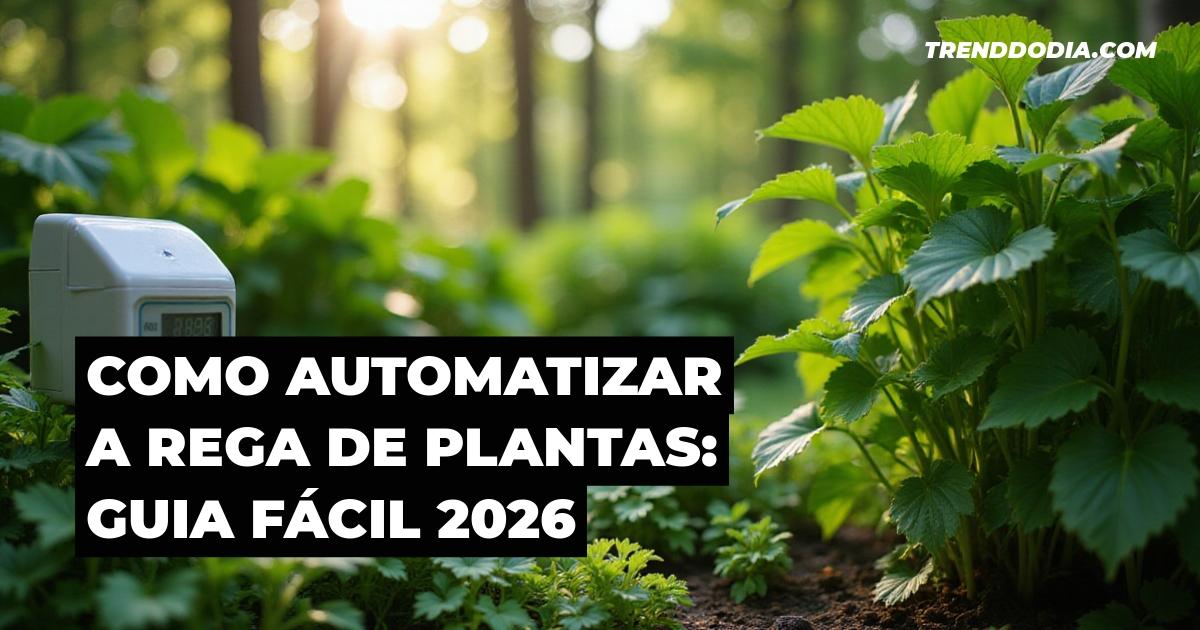
You can automate plant watering with three main solutions: gravity-fed systems with bottles and wires, ready-made kits with timers and pumps, or automatic taps controlled by an app. These are affordable options that work well at home, in apartments, or while traveling.
The problem is that if you choose the wrong system or poorly regulate the watering time, you could end up killing your plants from over- or under-watering. Let's see step by step how to assemble, adjust, and choose the right option for your needs.
Why is it worth automating plant watering?
Automating watering helps keep your plants healthy even when you're busy or traveling. This frees up your time each day, eliminating the need to constantly rush to water the roots.
Imagine situations where lack of watering damages the leaves or roots. Even at home, it's easy to get distracted and let the pots dry out, causing the plants to die. That's why economical garden irrigation systems help distribute water consistently.
A resident of São Paulo with a small vegetable garden in pots on his balcony installed a simple timer on his tap and now waters at the same time every day. This way, he avoids losing plants when he travels on weekends. In cities like this, with varied climates, this practice saves water in the garden.
Daily benefits: time saved, convenience, and fewer dead plants.
In today's busy world, having automatic watering means less worry about your plants. You set it up once and forget about it, which is especially useful for those who work long hours and don't have fixed schedules.
Want to avoid plants dying from neglect? These systems prevent excessive drying by keeping the soil sufficiently moist. Works well for succulents and fruiting herbs at home.
Water conservation and more uniform irrigation
Automatic irrigation systems can reduce water consumption by approximately 20% to 30% when properly regulated. Source: FAO (2023). This occurs because they release water slowly, without excess.
Watering evenly prevents problems like fungus caused by high humidity. In Brazilian gardens, this practice helps to care for potted plants efficiently, using less water in the garden.
Those who live in apartments suffer even more from a lack of time to water plants and need specific strategies. For example, use tips from... How to Care for Plants in an Apartment: Practical Tips to combine automation with the right plant choices.
What are the most commonly used types of automatic irrigation systems in houses and apartments?
There are various types of automatic irrigation systems for use in houses or apartments, ranging from simple solutions to more elaborate systems. The choice depends on your space and how many plants you have.
In smaller units, such as apartments with small planters, opt for compact options. After the pandemic, interest in gardening and home vegetable gardens increased in large Brazilian cities. Source: IBGE (2022).
For those who want practicality, consider systems that work without being plugged in. For example, placing inverted bottles with wires that drip directly onto the roots is a simple idea for pots in the kitchen.
Example of a resident of Curitiba who uses drip irrigation bottles in planters in the service area. Meanwhile, a neighbor uses a micro-irrigation kit connected to the laundry room faucet. Both ensure their plants are always green.
When discussing drip irrigation, remember that it releases water drop by drop directly onto the roots. Read more about it in [link/resource]. How to Set Up a Drip Irrigation System: A Practical and Inexpensive Guide.
Simple and inexpensive solutions without electricity.
To start without spending much, use gravity with perforated plastic bottles. Hang them upside down and the wires will carry water to the pots, ideal for automatic watering of potted plants.
This option works well in an apartment, without the need for electricity. Simply fill it with water and place it on the ground to drip slowly.
Ready-to-use kits with timer, pump, and micro-irrigation system.
Kits range from R$ 50 to R$ 200 and include hoses with drippers. They connect to the tap with a timer, regulating hours and minutes to water plants at home or in the garden.
For larger spaces, opt for small, plug-in pumps. They make it easy to automatically water multiple pots at once, like in an indoor garden.
| System Type | Average Cost | Advantages | Disadvantages |
|---|---|---|---|
| Gravity System (Bottles) | R$ 10-30 | Simple, no electricity required, ideal for a few pots. | Less control, needs to refill water. |
| Kits with Timer | R$ 50-150 | Automates scheduling, good for vegetable gardens. | It needs a nearby tap. |
| Systems with Pump and App | R$ 100-300 | Remote control, sensors | More expensive, depends on Wi-Fi. |
How to assemble a simple automatic irrigation system step by step?
To set up a simple automatic irrigation system, start by choosing materials that fit your budget. Think about common materials like hoses and drippers that you can find in stores near your home.
Step-by-step instructions for someone in Belo Horizonte to install a timer on their backyard faucet. Then, distribute hoses with drippers to 10 plant pots, adjusting the watering time for the city's climate.
In hot climates, watering early in the morning can reduce water loss through evaporation by up to 20%. Source: Embrapa (2021). This helps to plan the watering schedule based on the sun.
When testing, check that the soil remains moist enough at the roots. In drier environments, combine with tips from... How to Increase Humidity in Houseplants for a better result.
Basic materials you need to have at home
You need a thin hose, plastic drippers, and an inexpensive timer. These items are cheap and work well as a timer for watering a garden.
For just a few pots, use a cut-up plastic bottle or go to a gardening store. That way, you can set everything up in an afternoon.
Adjusting watering time and practical testing.
Adjust the time starting with 5 minutes a day and observe the plants. Increase the time if the soil dries out quickly, but sift the water to avoid waterlogging the roots.
Run tests for a week, noting how the leaves turn out. This way, you can calibrate the system for local conditions.
How to automate plant watering in a small apartment?
In small apartments, focus on options that don't take up extra space. Consider compact systems for nooks and crannies like windowsills or balconies.
In addition to automating watering, adjusting lighting and ventilation, and choosing suitable plant species. See more at How to Care for Plants in an Apartment: Practical Tips.
Apartments represent the majority of new residential developments in Brazilian capitals. Source: IBGE (2023). Therefore, practical indoor cultivation solutions are essential.
Example of a person in a studio apartment in Rio de Janeiro with a vertical succulent garden. She uses a reservoir with a 5V pump and a timer plugged into an outlet in the laundry room to avoid making a mess.
Compact options for balconies, windows and vertical gardens.
Use small pumps or smart plugs to pipe water into planters. Ideal for automatic watering of small potted plants.
In vertical spaces, distribute drippers along the panels. This saves space and keeps the hydrangeas green.
Extra precautions to prevent leaks and seepage.
Check connections to prevent water from dripping from the ceiling. Use sealant on long hose joints.
Position water tanks in safe locations, such as the laundry room. This prevents accidents in small homes.
How much does it cost to automate plant watering? Comparing options
Costs vary depending on the complexity of the system. Start with inexpensive makeshift solutions to test before investing in kits with irrigation timers.
Compare a resident of Recife assembling a system with bottles and wires for less than R$ 30. Another bought a micro-irrigation kit with a timer for around R$ 150 for a larger garden.
Simple home automatic irrigation systems can cost less than R$ 50. Ready-made kits range from R$ 100 to R$ 300 in national stores. Estimate based on average Brazilian retail prices (2025).
For those who want to spend little but still be efficient, investing in a well-planned drip irrigation system is a good option. Details at [link/website address]. How to Set Up a Drip Irrigation System: A Practical and Inexpensive Guide.
Cost overview: from improvisation to a complete system
Improvised options cost from R$ 10 to R$ 40, using household items. Basic kits for indoor growing with watering range from R$ 50 to R$ 100.
Advanced systems reach R$ 300 or more. Choose based on the number of plants in your home.
When is it worth paying more for automation with Wi-Fi or sensors?
Pay more if you travel frequently and need remote control. Sensors automatically detect soil moisture.
In these cases, kits with Wi-Fi are worthwhile for monitoring plants online, especially in urban apartments.
| Option | Approximate Cost | Ideal For | Advantages |
|---|---|---|---|
| Improvisation (Bottles) | R$ 10-40 | Few vases | Cheap, no installation required. |
| Simple Kits | R$ 50-100 | Small vegetable gardens | Efficient timer |
| Advanced Systems with Wi-Fi | R$ 150-300+ | Travelers, apartments | Remote control, sensors |
How can you use technology, apps, and Wi-Fi to control irrigation remotely?
Use technology to water plants remotely via a mobile app. These could be smart plugs that turn on pumps when you're away.
Some apps help remind you to water your plants when needed, as well as record plant data. See more at [link/website address]. Best Gardening Apps in 2026: Highlights.
The use of connected home devices, such as smart plugs and light bulbs, is growing year after year in Brazil. Source: national market research (2024). This makes Wi-Fi easier for those who live alone.
Example of a person in Porto Alegre using a Wi-Fi outlet and an app to control a water pump while traveling. She checks the forecast before activating it, saving water.
Smart plugs, digital timers, and smartphone control.
Wi-Fi plugs connect to a conventional outlet and turn on/off via an app. Ideal for automatic watering with a simple digital timer.
Simply download the app compatible with Android or iOS. Call the vegetable supplier when there is less rain in the region.
Humidity and rain sensors: when does it make sense to use them?
Sensors measure the soil and send alerts to the app if water is needed. This makes sense in variable climates for adjustable Wi-Fi irrigation.
For rain, external sensors automatically pause the system. These are useful for large home gardens, but at an extra cost.
You can automate watering with simple solutions like bottles and drip irrigation, or systems with timers and Wi-Fi. The choice depends on space, time, and budget. Test the watering schedule and adjust it to the local climate to always have beautiful plants.
Tell me what system you plan to set up! Share your experience with automatic irrigation and send any questions you may have about your space or plant type.