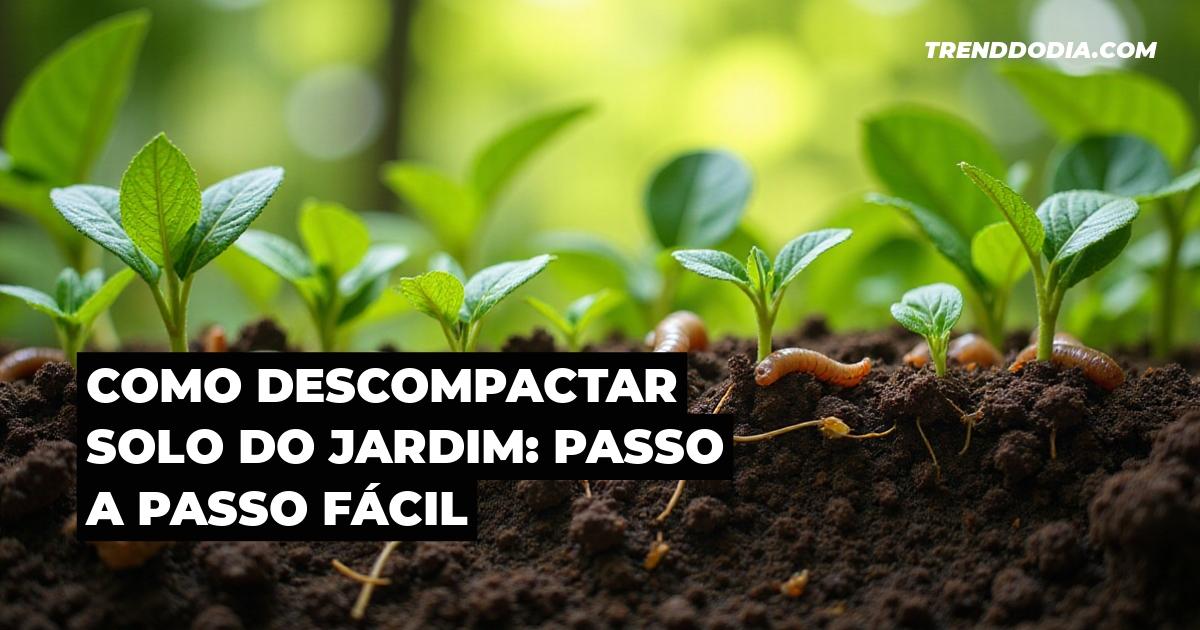
Look, you can loosen the soil in your garden with very simple methods: just add plenty of organic matter, do a deep watering, use hand tools like a garden fork, and plant ground cover. All this without needing heavy machinery, improving the soil structure in a few weeks to a few months.
If your backyard looks like hard cement where nothing grows, the good news is that you can gradually restore the soil with things you probably already have at home. Let's see how to loosen the soil without spending a lot of money and without harming your plants.
What is compacted soil and how can you tell if it's the problem?
Compacted soil occurs when the earth becomes too hard, packed like a rock, hindering root growth and water absorption. This happens due to excessive foot traffic or overused, neglected land. As a result, plants become weak and water forms puddles instead of evaporating into the soil.
To know if your garden soil is like this, look for easy signs such as standing water after rain, thin and sparse grass, or a shovel that doesn't go in easily. This problem hinders the vegetable garden and can kill young plants at the roots. Imagine a backyard in an urban neighborhood of São Paulo where this occurs, with persistent puddles and wilted grass showing hard soil in the garden.
Studies by Embrapa (2020) indicate that compaction affects a large portion of Brazilian agricultural soils, especially in areas with constant trampling. This data shows that it is not uncommon in typical backyards.
Main signs that the soil is compacted.
Besides puddles of water after rain, look for roots emerging or sprouting on the surface as they seek air and space lacking in the hard soil. Plants grow slowly and leaves yellow early, a sign of suffocated roots. Therefore, identifying this quickly helps you act immediately and save your vegetables.
Also, try inserting a thin stick: if it only goes in about 10 cm, the compaction is strong. This home remedy confirms the problem without spending any money.
Common causes of soil compaction in the garden.
The main causes include excessive walking on the soil, such as on frequent backyard paths or while playing there. Additionally, quick, shallow watering doesn't help roots grow deeper. For this reason, soil under grass or near houses suffers more.
Clay soils, common in Brazil, compact easily and need organic matter to become less sticky. By the way, you can read more about caring for them in the article. How to Prepare Clay Soil for a Fertile Vegetable Gardenwhich explains how to improve these lands in the third paragraph.
How to loosen compacted soil without digging deep?
You can loosen hard soil without digging too much by focusing on the surface. Add organic matter on top and use mulch to trap heat and protect from trampling. These steps help the soil decompose on its own, loosening naturally from the bottom up.
Research from Embrapa (2018) shows that the continuous use of organic matter improves soil porosity over time. This allows roots to penetrate better without disturbing the soil. For example, in a backyard garden in Recife, a resident covered the soil with straw and applied compost on top, without digging, and within 2–3 months felt the soil become looser, as if hard earth had to be loosened without digging.
Start by applying 5 to 10 cm of organic material for protection. Then, watch as earthworms and bacteria do the work for you, gradually loosening the soil.
Surface composting and mulch
Compost by placing organic waste such as fruit peels directly on the soil, without burying it. Mix in dry leaves or grass clippings as mulch to retain moisture and prevent new compaction. This way, bacteria break everything down and leave the soil loose in weeks.
This saves effort because you don't need to dig much. Use everyday discarded materials, such as onion peels or food scraps.
Step-by-step instructions for applying 5–10 cm of organic matter.
First, clean the garden bed by removing large stones or surface debris. Then, add homemade compost, leaves, and dry straw. Next, spread it evenly over the soil, without stirring it thoroughly. Finally, water it lightly to help with initial decomposition.
Producing your own compost at home is inexpensive, as explained in this link to... home compostingIn the second paragraph, I see that this ensures organic matter is always on hand to loosen hard soil without digging.
Does deep watering really help to loosen the soil?
Yes, deep watering helps a lot, as a large quantity of water wets everything, even the deep roots, loosening particles stuck together due to dryness. This creates natural fissures and improves space for air and nutrients. But do it slowly, so as not to push dirt down.
Water management techniques in compacted soils are recommended in Embrapa publications (2015) to improve root development. This results in stronger plants. Imagine a tree on a sidewalk in Curitiba where the owner made holes with an iron bar and soaked it deeply, seeing vigorous roots within months and fewer cracks in the soil.
Caution: Water thoroughly once a week, not lightly every day. This allows roots to grow deep and prevents surface compaction caused by lack of water.
How to deep water trees and shrubs
For deep root watering, place a hose or bucket of water at the base of the tree for 30-60 minutes. Make circles around the canopy, as if you were slowly flooding it. Then, wait a few days before repeating, allowing time for the roots to absorb the water and the soil to relax.
This works for shrubs too; double the time if the soil is heavy clay, which is common in some regions of Brazil.
Take care not to overwater and worsen the situation.
Avoid overwatering, as excessive water leaves the soil waterlogged and harmful bacteria multiply. Use your thumb to test: if it's moist at 5-10 cm, stop. Also, only water early in the morning or late in the afternoon to prevent rapid evaporation and loss of effectiveness.
If you notice persistent puddles, reduce the frequency of your next watering. This prevents erosion and keeps the soil loose for longer.
Hand tools for loosening garden soil
Hand tools like a pitchfork help loosen soil without machinery, creating holes and cracks to allow air to enter. They are inexpensive and easy to use in small gardens, improving clay soil as well.
Technical guides from Embrapa (2000) highlight that tools that break up the soil at depth, without excessive disturbance, tend to better preserve its structure. For example, a resident of Belo Horizonte used an inexpensive pitchfork for cracks in a flower bed, filled it with sifted compost, and the soil improved within weeks.
Use them carefully to avoid damaging existing roots. Always clean them afterwards to prevent future problems.
Pitchfork, hoe, and hand cultivators: when to use each one.
A pitchfork is good for very hard soil: stick it in deep and pull it upwards, creating spaces. Use a hoe for shallow surfaces, removing thick grass. Then, hand cultivators are useful for small beds, mixing in light organic matter.
Choose by size: a pitchfork for large trees, a hoe for vegetable gardens. These hand tools help improve porosity in clay soil without costing much.
Table comparing cost, effort, and depth of the methods.
See the table below to compare hand tools.
| Method | Cost (R$) | Effort (1-5, 5=max) | Depth (cm) |
|---|---|---|---|
| Forced | 50-100 | 3 | 20-30 |
| Mattock | 30-80 | 4 | 10-15 |
| Cultivator | 20-60 | 2 | 5-10 |
This comparison shows that the cultivator is easier for beginners, but the pitchfork penetrates deeper.
How to use plants and organic matter to keep the soil loose.
Use plants as green manure to cover the soil and leave roots loose in the ground. This adds natural organic matter, filling in gaps and preventing future compaction. It's sustainable and keeps the garden productive in the long term.
Studies on green manure by Embrapa (2019) indicate an increase in soil organic matter and an improvement in its physical structure. For example, in Porto Alegre, a community garden planted cowpea and velvet bean as green manure, cut it and left it on the ground, noting dark and loose soil within a year.
Combine with permanent ground covers to keep the soil protected and prevent constant trampling.
Living cover with green manure
Plant green manure such as lupins or oats in empty garden beds. Let them grow until they flower, then cut them back and bury them lightly. This way, the roots open up the soil and the debris becomes nutrients, keeping it loose.
Choose easy-to-grow local plants, as green manure prevents erosion and improves soil aeration.
Crop rotation and permanent ground cover
To keep the soil loose, alternate annual and permanent plants. Always cover the ground with leaves or straw, avoiding exposure. This prevents compaction and naturally enriches the soil.
In cases of excessively compacted areas, consider Húgelkultur as an alternative, a technique that also helps to... improve the soil for raised flower beds
What precautions should be taken with clay soils, sandy soils, and lawns?
Each type of soil requires its own approach: clay soil needs more organic matter to loosen; sandy soil needs less water because it loosens easily; lawns need manual aerators. Therefore, adjust the method for better results in your garden.
Technical publications from Embrapa (2017) highlight that sandy and clayey soils react differently to compaction and management. In Campinas, a clayey garden under grass was improved with holes and coarse sand plus compost, aiding infiltration.
Remember: test the soil first, touching it and feeling its density.
Specific tips for clay soil and sandy soil
For compacted clay soil in the garden, add coarse sand and compost mixed superficially. This helps prevent the clay from sticking. For sandy soil, use less soil as it comes loose easily; focus on fixing nutrients.
Clayey soil, common in Brazil, forms blocks; sand prevents rapid water loss.
How to loosen compacted grass in areas without destroying it.
Use a hand aerator to create air pockets in the grass, without uprooting everything. Then, spread fine compost. This will encourage roots to emerge from the surface.
Water thoroughly afterwards. For large lawns, do sections at a time.
Common mistakes during decompression and how long it takes to see results.
Avoid digging too deep or leaving the soil bare, as this worsens compaction. These common mistakes delay improvement, causing the soil to become hard again.
Rural extension materials from Embrapa (2016) reinforce that excessive soil disturbance can increase the degradation of its structure over the years. In Salvador, a resident who dug monthly saw the soil last longer; he switched to cover crops and observed improvement.
Be patient: changes come slowly, but consistent changes bring benefits.
Practices that worsen compaction without you realizing it.
Digging deep always disturbs the structure and exposes the soil to the hot sun. Also, walking on dry soil compacts it further. Therefore, avoid this and use cover crops instead. Consistent improvements bring benefits.
Another mistake: delaying deep watering, leaving the soil dry and cracked inside.
Realistic timelines: what to expect in weeks and months
Within weeks, you'll see softer soil on the surface with organic matter. Within months, roots grow, puddles diminish. Depending on the type, 3-6 months for good results.
Keep checking and adjusting as you make gradual progress.
Loosening up garden soil without machinery is possible by combining organic matter on the surface, thorough deep watering, moderate use of hand tools, green manure, and specific care for each soil type. Remember that the process is gradual, but the soil will become looser and more fertile over time.
Try at least one of the methods explained, observe the results over the next few weeks, and leave a comment telling us how the garden soil is doing and what questions you still have.