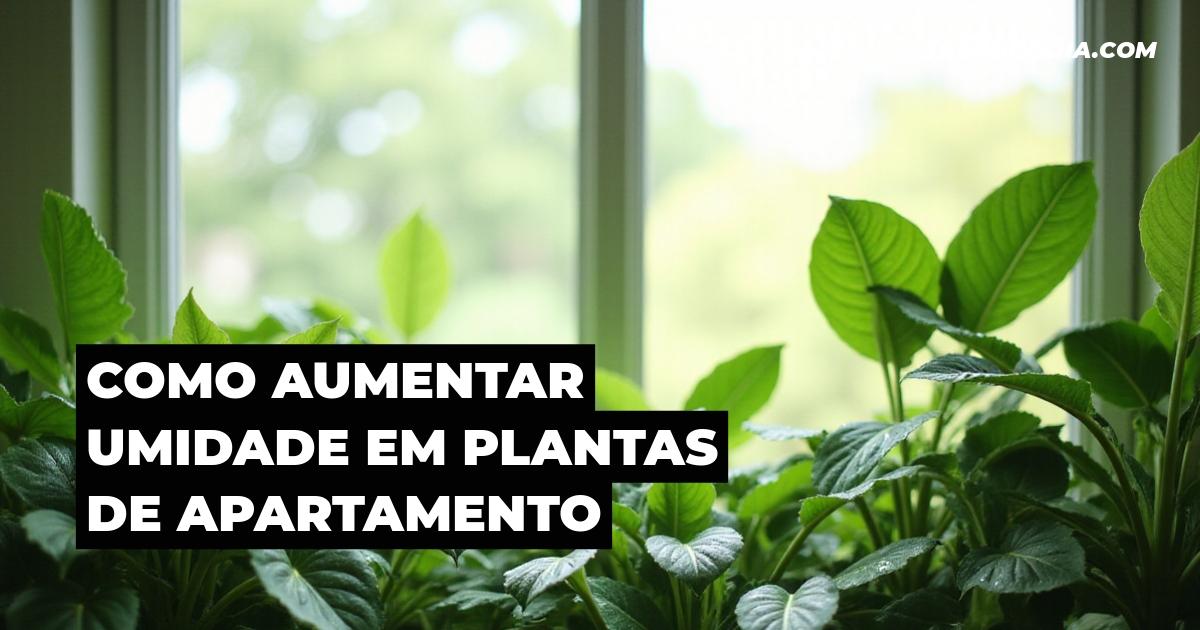
You can increase humidity for plants in an apartment using simple methods: grouping pots together, using a tray with pebbles and water, misting the leaves, placing containers with water, taking advantage of the bathroom and kitchen, and, if you wish, using an electric humidifier.
The problem is that if you do it the wrong way, you risk mold, root rot, and even becoming a breeding ground for dengue mosquitoes. Let's see, step by step, how to make the air more humid for your plants without putting your home at risk.
Why does the humidity in your apartment matter so much for your plants?
In Brazilian apartments, the air can become very dry, especially in winter or with air conditioning running all day. This situation directly affects your plants, leaving them with wilted or yellowed leaves. Therefore, understanding humidity is fundamental to keeping them healthy and your green space vibrant.
Imagine a resident of São Paulo who experiences a dry throat in winter and notices yellowing leaves on calatheas and ferns due to humidity levels around 30–40°C in their apartment. These signs illustrate how low humidity can be a concern for those who want to properly care for indoor plants.
INMET recorded that, on some winter days in cities like São Paulo, the relative humidity in urban areas can fall below 40% (INMET, 2023). This data illustrates why many tropical plants, common in apartments, suffer during these times.
What is the ideal humidity range for indoor plants?
Most houseplants prefer a relative humidity between 40°C and 60°C, known as RH% (relative humidity). At this level, they breathe well and grow without stress. If it falls below this, they enter defense mode, losing leaves.
To measure it, use an inexpensive hygrometer, which you can find in online stores. This way, you avoid guessing and adjust your care based on real numbers.
How low humidity harms your plants (and you too)
In dry air, plants transpire more water through their leaves, becoming weak and susceptible to pests. You may also experience dry skin or irritated eyes. For this reason, maintaining the right humidity benefits everyone in the house.
In addition to affecting overall health, low humidity can cause plants to stop blooming. If you're just starting out, it's worth checking out a general guide to plant care in an apartment – check it out. How to Care for Plants in an Apartment: Practical Tips For more details on light, watering, and substrate.
How can you tell if your plants are suffering from dry air?
Signs of dry air are easy to notice if you observe your plants every day. They indicate that the problem is not with watering, but with the environment. In cold cities, like Curitiba, this is common during the coldest time of the year.
Describing the signs helps you act quickly. Often, you can fix this without spending much, just by changing the position of the pots or adding water near them.
Research from Brazilian health institutions indicates increased respiratory tract irritation during prolonged periods with humidity below 40% (2022). This warning applies to both you and your plants.
Signs on the leaves that indicate a lack of moisture.
Leaves with dry or brown tips usually indicate very dry air. If they curl or fall off suddenly, it's a clear sign of environmental dehydration. In this case, misting or grouping pots together may solve the problem.
Observe if this happens in delicate plants, such as calathea. Compared to more resistant plants, they react worse to drought.
Difference between dry soil and dry air
Dry air affects the leaves, while dry soil makes the pot feel light when lifted. If you water more and the problem persists, it's the air. For example, roots in damp soil won't solve the problem if the leaves transpire without vapor.
In small apartments, mixing these things up is common, but testing the soil with your finger helps to distinguish them. Right after that, focus on humidifying the air without soaking the soil.
7 practical ways to increase humidity for plants in an apartment.
There are inexpensive ways to increase the humidity in your apartment using materials you already have at home. Creating a plant corner in a small apartment in Belo Horizonte, combining ferns, pothos, and ribbon plants in the same holder, works well.
With a tray filled with pebbles and water under two pots, and a morning misting, the environment becomes more vibrant. This way, you create a humid microenvironment without expensive equipment.
International studies with houseplants show that groups of plants can raise local humidity by about 10–20% in small enclosed environments (2019). This small increase helps on drier days.
Always combine this with proper watering, without confusing air and soil. If needed, read about watering frequency in [source/resource]. Proper watering of plants.
1. Group plants together to create a humid microclimate.
Placing pots close together creates a vapor circle, naturally increasing the humidity around them. This works well in isolated rooms or bedrooms. As a result, each plant releases and reuses its own transpiration.
To begin, place three or four potted plants like peace lilies together. Then, see if the leaves improve after a few days.
2. Use trays with stones and water, but do not soak them.
Place small pebbles or clay balls in the tray, pour water until it reaches halfway up the pebbles, and place the pot on top, without touching the water. The steam will rise slowly, humidifying the air. Avoid soaking the roots this way.
This method is ideal for pothos or ferns in air-conditioned apartments. Change the water weekly to keep it clean.
3. Spray the leaves at the right time of day.
Use room temperature water and lightly mist the leaves in the morning, when the sun isn't strong, to avoid stains. It works well on Mondays in winter, like in São Paulo apartments on cloudy days.
For large plants, opt for a spray bottle with a fine nozzle. Do this two to three times a week, depending on how dry the plants are.
4. Containers of water near the flowerpots.
Deep plates or bowls filled with water placed next to vases allow the water to evaporate slowly, adding moisture to the environment. This is useful for areas such as dining rooms in apartments. Only change the water if it becomes cloudy.
In small rooms, position it near the window to combine with natural light. It works especially well in autumn.
5. Take advantage of bathroom and kitchen steam.
After showering, let the steam circulate by bringing plants into the space for a few minutes. In the kitchen, it's similar during cooking. It quickly raises humidity in damp areas.
This is practical in Brazilian apartments, where bathrooms are close to the living rooms. But don't leave plants there all day to avoid problems.
6. Electric humidifier: when is it worth it?
If other methods aren't enough in very dry regions, like in the South, buy an inexpensive humidifier and place it next to the plants. Choose models that shut off when the water runs out.
It costs around R$ 50 to R$ 150, ideal for those who have many plants. Remember to clean it weekly to prevent bacteria buildup.
7. Quick tricks: damp towel and a pot of hot water
Hang damp towels in the room or place a pot of boiling water near the plants. The steam helps immediately, especially on cold days. Use clean towels to avoid soiling them.
For emergencies, like suddenly drying plants, this works. But combine it with others for lasting effects.
Which plants help increase humidity in Brazilian apartments?
Some plants evaporate more water, helping to humidify the surrounding air. They are ideal for Brazilians who want natural efficiency in air-conditioned apartments.
To cite the example of an apartment in Recife with a shady corner using ferns, peace lilies, and pothos near the window, the environment becomes cooler and more humid, even with the fan on.
The ornamental plant market in Brazil generates billions of reais annually, with a particular focus on indoor species used in apartments (IBRAFLOR, 2022).
| Plant | Ideal Humidity Range | Benefits | Recommended Location |
|---|---|---|---|
| Fern | 50-70% | A lot of water evaporates through the leaves. | Shaded rooms |
| Boa constrictor | 40-60% | Durable and helpful in humid microclimates. | Interior rooms |
| Peace lily | 50-60% | Absorbs and releases moisture. | Near windows |
| Bow tie | 40-60% | Quick to increase steam | Cold kitchens |
| Calathea | 60-80% | Sensitive, but ideal for high humidity. | Wet bathrooms |
For air-conditioned rooms and bedrooms, choose ferns or pothos, which handle recirculated air well. They combat dryness without needing much space.
When discussing combining decorative plants with herbs in small spaces, check out... herb garden at home If you want to set up a herb garden inside your home.
Options for bathrooms and kitchens that are more humid.
In bathrooms, plants like calathea like to be removed from the water after showering. They don't suffer from high humidity, unlike most plants.
For kitchens, pothos or bow tie plants adapt well, but avoid excessive heat from stoves. This creates balance in naturally wetter areas.
Care tips by region in Brazil and common mistakes when humidifying your apartment.
In Brazil, needs vary by climate. In the South/Southeast, such as in Porto Alegre or São Paulo, dry air in winter requires more humidification tricks. In the North, the focus is on ventilation.
Comparing a resident of Porto Alegre struggling with extremely dry air in winter with someone in Manaus shows how region affects care. In Manaus, the concern is more with ventilation and mold than with lack of humidity.
Health surveillance bulletins indicate an increase in dengue cases associated with the presence of stagnant water in urban homes (Ministry of Health, 2023). This highlights the need to keep clean water in trays.
Mistakes, such as leaving stagnant water, attract insects. Overwatering and causing waterlogging are also beneficial. How to Save Waterlogged Plants: Quick and Easy Steps as a solution.
Differences between dry South/Southeast and humid North/Northeast
In the South/Southeast, cold winters dry the air, so use groupings or humidifiers. In the North/Northeast, humid environments help, but be careful with excessive heat.
In Recife, for example, a bathroom is very helpful, unlike in Porto Alegre, where even damp towels make a difference. Adjust accordingly to your city.
Mistakes that cause mold, root rot, and mosquito breeding grounds
Leaving stagnant water without changing it attracts mosquitoes, especially those that carry dengue fever. Also, excessive steam can cause air to become clogged, creating mold. Always check for dry vases.
However, with weekly water changes and good ventilation, you can avoid this. Focus on prevention to keep your plants and home healthy.
Quick questions about humidity for plants in apartments.
Here, I answer common questions from those who live in studio apartments in São Paulo with air conditioning: whether spraying every day is harmful, whether a tray with water attracts mosquitoes, and what humidity level to aim for on a hygrometer.
Many tropical indoor plants thrive best in humidity levels between 50% and 70%, according to recommendations from Brazilian agronomic institutes (2021). Adjust accordingly.
FAQ: Direct answers to the most common questions
Spraying every day can cause fungus if leaves get too wet. A water tray attracts mosquitoes if not changed weekly. On the hygrometer, aim for 50-60 lTP4T to sample plants.
Yes, they work with proper maintenance. This resolves initial problems without spending a lot of money.
How to combine air humidity with watering without overdoing it.
Check the soil first: if it's dry to the depth of 2 cm, water it. Even with humid air, soil needs its own water. In some cases, combine methods for balance.
Next, monitor the leaves: if they improve, that's good. In other words, harmonize the air and soil for healthy plants.
In summary, increasing humidity for plants in an apartment involves understanding the ideal humidity range, identifying signs of dry air, applying practical methods (grouping, tray with pebbles, misting, steam from the bathroom, containers with water and, if necessary, a humidifier), choosing plants that help humidify, and adjusting care according to the region of Brazil.
Try at least two methods this week, observe the plants for a few days, and if possible, share in the comments which technique worked best or what questions you still have about humidity in the apartment.