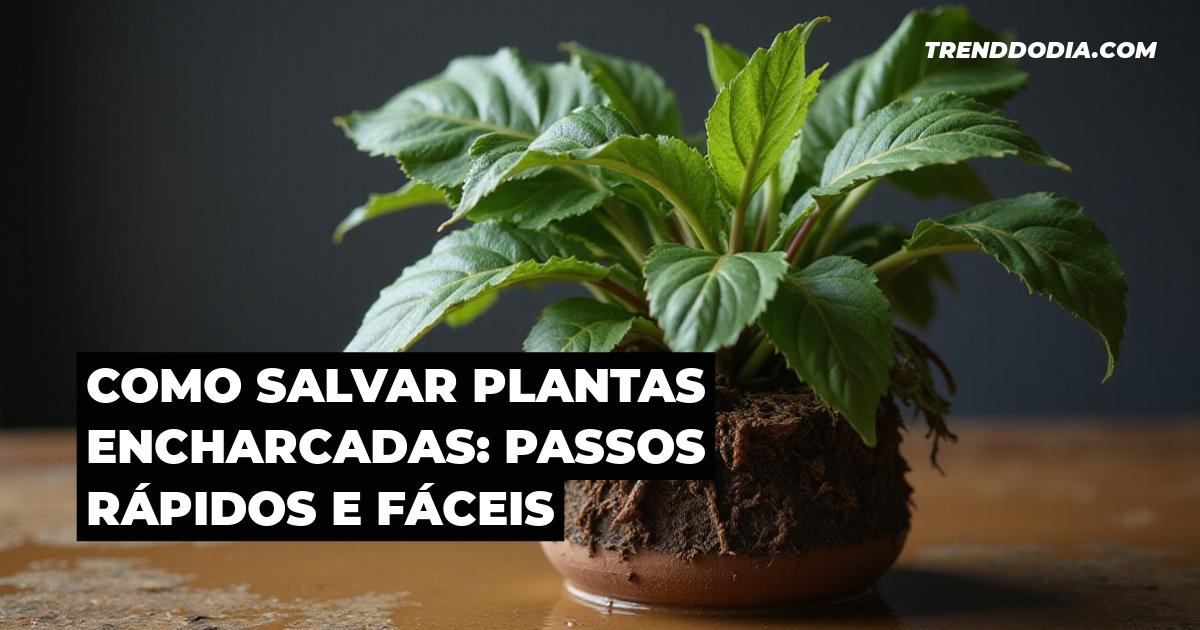
You can save waterlogged plants by stopping watering, drying the substrate, cutting off rotten roots, and replanting in a pot with good drainage. In many cases, new shoots appear within a few weeks and the plant returns to normal.
The problem is that if you make a mistake in the first 24 hours, the rot can worsen and kill the entire plant. Let's see, step by step, what to do now to increase the chances of recovery.
How to tell if your plant is really waterlogged.
Often, you look at your plant and see drooping or yellowing leaves, and you think it's because it needs water. But it could be the opposite: too much water is causing the problem to become waterlogged. That's why it's important to check for specific signs to take the right action.
A resident of Belo Horizonte, for example, noticed yellowing leaves on a peace lily during the rainy summer. She disturbed the soil in the pot and noticed it was always waterlogged and smelled musty. It became clear that it was due to overwatering.
Studies by Embrapa (2023) cite waterlogging as one of the main causes of root rot in intensive crops. This problem affects not only garden plants, but also potted plants. Early identification prevents greater damage.
In these cases, it's common to confuse it with something else, like pests. For example, if the leaves are wilted and drooping, it might seem like a lack of water, but waterlogging keeps the soil constantly damp and heavy. Read a guide about it. Are My Plants Wilting? See How to Help Them Quickly to understand other reasons besides excess water.
Difference between lack of water and excess water.
If there's a lack of water, the leaves become wilted and brittle, but the soil is dry to the touch. You can water it to see if it revives quickly. With that, the plant perks up soon.
In excess, the soil becomes like mud and the roots suffer. For this reason, cutting off watering altogether accelerates recovery, unlike watering even more.
Signs on the leaves, in the soil, and on the roots.
The leaves show small yellow spots, fall off easily, and have a strange smell. In the soil, it remains constantly wet, even days after watering. This causes fungi to develop rapidly.
When you touch the roots, they are dark, soft, and smell bad. First, focus on the external signs to decide the next step.
What to do in the moment: first aid for a drowned plant.
As soon as you notice signs of waterlogging, stop everything and act quickly. Removing the accumulated water is the first step to saving your overwatered plant.
A resident of São Paulo, after a week of heavy rains, took his pothos plant to a covered location. He tilted the pot to allow the water to drain through the holes and removed the full saucer, preventing the roots from being submerged. It was a simple action that helped.
Technicians from Embrapa (2022) emphasize that even a few hours of root asphyxiation reduces the ability to absorb nutrients. Therefore, immediately suspending watering protects the roots. Next, see how to water correctly in the future.
At this stage, do not add anything else to the soil. Allow it to dry naturally to avoid making the problem worse. To learn how to water correctly and prevent further waterlogging, check out the article. Proper watering of plants in the third or fourth paragraph.
Immediate steps within the first 24 hours
Remove the pot from direct sunlight and tilt it so the water drains out of the holes. Remove saucers or bases that collect water. This will help the substrate dry faster.
Use a fan to ventilate, but without too much force. At night, cover it if the air is cold, as exposed roots suffer even more.
When to remove the plant from the pot immediately
If there is a strong musty smell and roots are appearing on the surface, remove the plant from the pot immediately. Place the plant in a cool place so the roots can breathe.
Only wash the roots if there is excessive mud, but avoid thermal shock. In this sense, handling them gently preserves the healthy roots.
How to treat rotten roots and replant without spreading fungus.
After administering first aid, focus on cutting off any rotten parts of the roots. Use clean tools to avoid further contamination. Sprinkling cinnamon helps to disinfect naturally.
An amateur gardener in Curitiba removed a fern from its pot, cut off the dark, soft roots. She sprinkled cinnamon powder on the cut parts and replanted it in a lighter substrate of coconut fiber and sand. The result was excellent.
Technical publications from Embrapa (2021) indicate that fungi such as Fusarium and Rhizoctonia are among the main causes of root rot in waterlogged soils. Therefore, discarding the old substrate reduces risks, and using new soil leads to better root rot.
Often, changing the soil is worthwhile. In the second or third paragraph, learn more about when to renew the soil at the link. When to Change the Soil in the Pot: Signs and Practical Tips.
How to identify and remove only the diseased parts.
Healthy roots are white and firm, while rotten ones are black and soft. Cut with sharp scissors, cleaning each cut afterwards. This way, you save the good roots.
Remove fallen leaves before replanting to prevent future mold. First, remove only the diseased leaves; the green ones can remain.
Using cinnamon or hydrogen peroxide safely
Cinnamon powder is natural and safe for roots. Sprinkle it on before planting as an antimicrobial. But test sparingly, as too much can cause burns.
Diluted peroxide kills fungi without causing harm, but use 3% and spread it gently. In this regard, combine it with logs or bark for better drainage.
| Method | Advantages | Disadvantages |
|---|---|---|
| Ground cinnamon | Natural and affordable, it inhibits fungi without chemicals. | It can burn roots if used excessively. |
| Hydrogen peroxide | Disinfects quickly and affordably in pharmacies. | It needs to be diluted correctly to avoid oxidizing fabrics. |
| Dispose of and reuse soil | Avoid total contamination, but test old soil. | You may lose beneficial microorganisms if you sterilize. |
What precautions should be taken after replanting to help the plant recover?
After replanting, keep the plant in the shade and ensure good ventilation. Water sparingly for the first few days, only when the top is dry. Wait for new shoots before returning to normal.
Example of a resident of Salvador who replanted a zamioculcas: kept it in indirect light and ventilation for three weeks. Without strong fertilizer, until sprouts appeared.
Rural extension technicians (2022) report that visible recovery after waterlogging takes 2 to 6 weeks, depending on the species. Keep an eye on it and avoid overwatering.
Shade, ventilation, and watering during the first few days.
Choose a spot with diffused light, not direct sunlight. Ventilate by opening windows during the day. Water only when the soil appears dry 2 cm below the surface.
Thus, roots are established without stress. First, focus on this trio for success.
When to fertilize and prune the plant again
Fertilize only after 4 weeks, using diluted fertilizer. Prune dry leaves gradually. In this regard, cut away anything that was causing problems.
Have you noticed improvements? Go slowly so as not to overexert yourself. Soon, you will see healthy growth.
How to prevent waterlogging in pots, vegetable gardens and flower beds
To prevent this, use pots with drainage holes and layers of stones. In vegetable gardens, raise the beds. Add organic matter to the soil for better drainage.
A vegetable producer in Piracicaba uses raised beds and drip irrigation. This helped avoid losses during the rainy summer by using less water.
Recommendations from Embrapa (2020) highlight that drainage and localized irrigation reduce diseases. So, adapt your routine.
For indoor use, see the link. How to Care for Plants in an Apartment: Practical Tips in the third or fourth paragraph.
Simple solutions for pots and planters.
Use sand at the bottom of the pot for color. Replace heavy soil with a potting mix containing humus. Avoid plastic saucers that collect water.
Choose pots that are aerated or porous ceramic. These help the roots breathe.
Tips for urban gardens and orchards in rainy regions.
Raise the garden beds 30 cm off the ground. Install timed drip irrigation. Use mulch to protect against rain.
In the Southeast region, extra care is needed in the summer. First, plan for topdressing; then, reduce watering.
| Environment | Ideal Solution | Advantages |
|---|---|---|
| Vases | Layers of rock and sand at the bottom | Improves drainage and prevents waterlogged roots. |
| Vegetable gardens | Raised beds with drip irrigation | Reduces compaction and losses due to rain. |
| Common gardens | Mulching with straw or bark | Keep the soil loose and prevent runoff. |
Common questions about waterlogged plants answered.
Many people wonder if black root is still salvageable, or how long recovery takes. Direct answers help to avoid panic.
Let's address some real questions: can you reuse old soil? Only if you sterilize it with cinnamon. For waterlogged succulents, cut everything off and replant quickly.
Technical assistance technicians report that significant losses in potted plants come from watering errors, mainly overwatering in urban areas (2021). In other words, waterlogging kills more plants than you think.
Is it still possible to save a plant with completely black roots?
If any good roots remain white, cut off any rotten parts and replant. Succulents are more resistant. First, check the species; some die.
Don't force it if everything else has failed. In that case, buy new seedlings and prevent mistakes.
How long does it take to see signs of improvement?
Signs appear in 1-2 weeks: leaves no longer fall off. New shoots appear in 3-6 weeks. It depends on the species.
Keep an eye on it daily. You'll notice a difference soon.
To summarize, saving waterlogged plants involves recognizing the signs early, providing first aid, treating the roots, replanting in well-draining substrate, and adjusting care afterward. It's important to emphasize that prevention through good drainage and proper watering avoids future problems.
We suggest you tell us in the comments which plant you're trying to save, which steps you've already tried, and send us specific questions about species like succulents, orchids, or vegetables for future updates to the guide.