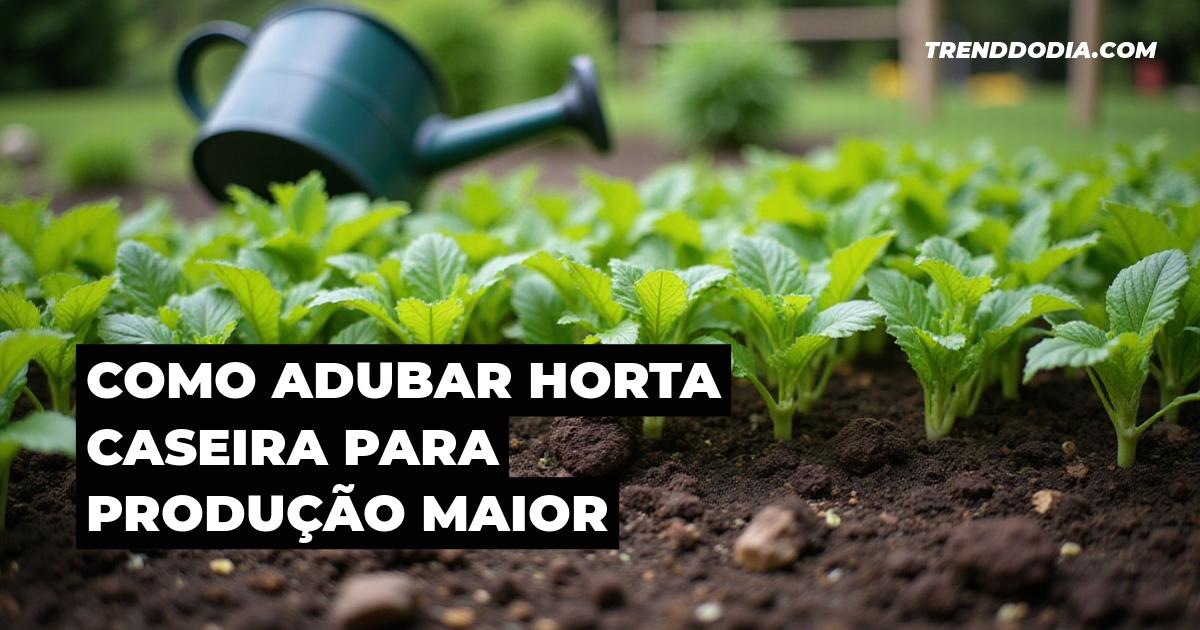
To fertilize a home garden, start by mixing organic fertilizer, such as manure, compost, or humus, into the soil before planting. Then, replenish small amounts every few weeks, always keeping a distance from the stem. Afterwards, water to prevent the roots from being burned.
If you've ever seen your plants turning yellow, growing slowly, or dying unexpectedly, it's probably due to a lack or excess of fertilizer. This happens to many people, so let's look step-by-step at how to choose the right fertilizer, how much to use, and when to apply it to have a thriving garden, spending little and without mistakes.
Why does fertilizing your home garden make such a difference?
Fertilizing helps the soil provide the nutrients your plants need to grow healthy. This prevents them from becoming weak and producing poorly. It's easy to take care of this at home.
Imagine two vegetable gardens in a neighborhood backyard. One uses only regular soil from the back of the property, while the other mixes in organic fertilizer. The second garden produces more lettuce and green onions, and they last longer. That's the difference the fertilizer makes.
Vegetables rapidly deplete nitrogen, phosphorus, and potassium from the soil, requiring frequent nutrient replenishment (source: Embrapa, 2022). Therefore, regular fertilization keeps everything balanced and productive.
What are N, P, and K in practical gardening?
N is nitrogen, which helps with green leaves and initial plant growth. P is phosphorus, for strong roots and flowers, and K is potassium, for healthy fruit. You see this in the NPK balance.
For example, a vegetable with yellow leaves may need more nitrogen, while one that doesn't flower needs phosphorus. Understanding this makes it easier to adjust your garden.
Clear signs that your garden needs fertilizer.
Yellowing leaves or slow growth indicate a lack of nutrients, such as nitrogen. Weak roots or no fruit show a problem with phosphorus or potassium.
In these cases, also observe the soil: if it seems depleted, it's time to fertilize. This care prevents unnecessary losses in production.
Extra recommendation
In everyday life, to maintain healthy and balanced soil that retains nutrients, it's worthwhile to delve deeper into regenerative gardening. Check out this helpful link: green manureThen you're ready for more.
Which homemade organic fertilizers work best in the vegetable garden?
Organic fertilizers come from natural matter, are rich in nutrients, and are safe for the soil. You can compost kitchen scraps or use well-rotted manure.
A resident of a poor neighborhood in Salvador collects vegetable scraps, fruit peels, and dry leaves in a bucket with holes. He makes compost in 2-3 months and uses it in his herb and pepper garden. It's practical and economical.
Look, Brazilian urban areas have been increasing the use of domestic organic waste for composting and vegetable gardens, according to a technical survey by Embrapa (2023). This reduces costs and helps the environment.
To make simple compost at home, you can follow easy methods. If you want extra details, take a look at this link: home compostingChoose organic fertilizers that are easy to obtain at home; this way you improve the soil in the long term, without chemical risks.
Manure, humus, and compost: how to use them without making mistakes.
Chicken or cow manure is good for nitrogen, but use well-rotted manure to avoid burning the roots. Mix it into the soil before planting and cover with a thin layer.
Worm humus enriches the soil with microorganisms, helping roots. Composting transforms waste into fertilizer, taking months, but it's worthwhile for urban gardens.
Quick homemade fertilizers: coffee grounds, eggshells, and others.
Coffee grounds provide nitrogen and prevent pests; spread them around the plants. Ground eggshells provide calcium, preventing root rot.
Other options like herbal tea or wood ash are easy to make at home. Use them in small quantities to avoid overdoing it.
| Organic Fertilizer | Advantages | Disadvantages | Typical Use |
|---|---|---|---|
| Manure | Nutrient-rich, inexpensive | It can burn if fresh. | Mix into the soil before planting. |
| Compound | Improves soil in the long term. | It takes a while to get ready. | In vegetable gardens |
| Worm humus | Roots support, organic | Expensive to produce | In urban planters |
| Homemade liquid fertilizer | Fast-acting, natural. | Preparation takes time. | For watering leaves |
Chemical fertilizer (NPK) in the home garden: when is it worth using?
Chemical NPK fertilizer provides quick nutrients when the soil is depleted. Use it in vegetable gardens with delicate plants, but combine it with organic fertilizers for balance.
A person in Curitiba grows tomatoes and peppers in 20-liter pots. They use a low dose of NPK 10-10-10 fertilizer every 15 days to supplement with worm castings. This accelerates growth.
The consumption of simple or formulated mineral fertilizers such as NPK has grown in Brazil in recent years, mainly on small farms (source: Embrapa, 2021). Therefore, you optimize your production.
How to choose the right NPK formula for vegetables.
For leaves, choose NPK fertilizer with more nitrogen, such as 20-10-10. For fruits, use extra potassium, such as 10-10-20. Avoid high-potassium formulas to prevent problems.
Purchase from local agricultural stores, following the package instructions. Test small amounts on your soil first.
Take care not to burn the roots and leaves.
Apply away from the stem and water immediately afterwards. Wear gloves and avoid direct contact. If it rains, wait for the soil to dry beforehand.
Look, in cases like this, covering the soil helps prevent nutrient loss and reduces the need to reapply NPK. Mulch is also worthwhile. In these situations, NPK helps without causing harm, but always choose organic fertilizers if possible for soil health.
How to prepare the soil and apply fertilizer step by step.
Start by collecting stones and mixing soil with compost. Make furrows for the seeds and fertilize at the base. Always water after applying fertilizer.
Technical recommendations from Embrapa (2020) indicate that soil correction and preparation before planting increase the productivity of vegetables in small areas. Therefore, follow these simple steps at home.
A backyard gardener in Belo Horizonte creates a 1 m² raised bed, mixing soil from a riverbank, coarse sand, and compost. He makes furrows for lettuce seeds and incorporates well-rotted manure. It's easy to replicate.
Choose loose soil to allow for healthy root growth. Apply fertilizer in layers so that nutrients reach the deep roots.
Basic soil mix for garden beds and pots
For garden beds, use 60:% soil, 30:% compost, and 10:% sand. Mix well and test the pH if possible. Avoid heavy soil for drainage.
In pots, add more sand to prevent mold. This basic mixture helps prevent mistakes in the garden.
Steps for applying planting and topdressing fertilizer
When planting, mix the compost into the soil to a depth of 10 cm. For topdressing, spread it in a circle and cover with mulch. Reapply every 2-3 weeks.
With these techniques, your plants gain strength without complications.
| Type of Vegetable Garden | Earth (%) | Sand (%) | Compound (%) |
|---|---|---|---|
| Flower bed on the ground | 60 | 10 | 30 |
| Vase | 50 | 20 | 30 |
| Crate | 55 | 15 | 30 |
What are the most common mistakes when fertilizing a home garden?
Many people use excessive amounts, burning the roots. For this reason, use small, regular doses.
Excess fertilizer, especially chemical fertilizer, is one of the main problems in beginner vegetable gardens (source: Embrapa, 2021). Avoid this by following simple recipes.
Another mistake is applying it directly to the stem. Always keep it from a distance to avoid damaging it.
Excess fertilizer, acidic soil, and burnt plants.
Too much fertilizer makes the soil acidic and burns leaves. Test the soil pH if you suspect this.
Reduce the dose if you see signs of burning to save your plants. Then, wash the roots with water and add lime to neutralize the burn.
Lack of consistency and errors in fertilizer selection.
Forgetting to fertilize regularly weakens plants. Choose organic fertilizers for poor soils.
Adapting to your urban space avoids these common problems; with more attention, your garden will thrive without difficulty.
Simple fertilization schedule for lettuce, chives, and tomatoes.
For lettuce, fertilize every 15 days, focusing on the leaves. Use compost mixed into the soil.
Recommendations for managing family vegetable gardens highlight simple fertilization schedules for each crop as a way to increase production throughout the year (source: Embrapa, 2022). This allows you to plan better.
In Campinas, someone has three garden beds: lettuce, chives, and tomatoes. They apply planting and topdressing fertilizer on different dates, ensuring good harvests. For the tomatoes, they fertilize every two weeks with potassium. This schedule prevents deficiencies.
Combine with frequent watering for rapid absorption. Regarding the frequency of watering for tomatoes, it's worth paying close attention to specific care for tomato plants. Following this schedule, your home garden will be productive; pay attention to the ripening process.
Then, adjust with mulch to retain moisture and nutrients, saving time.
To have a productive home garden, start by preparing the soil, combining organic fertilizers and, if necessary, chemical fertilizers in small, regular doses. Respect the type of plant—leaf or fruit—and avoid mistakes such as excess fresh fertilizer or applying it directly to the stem.
Try a simple fertilization plan for 2 to 3 months, observe the changes in your garden, share your experience in the comments, and send specific questions about your plants so we can adjust the doses.