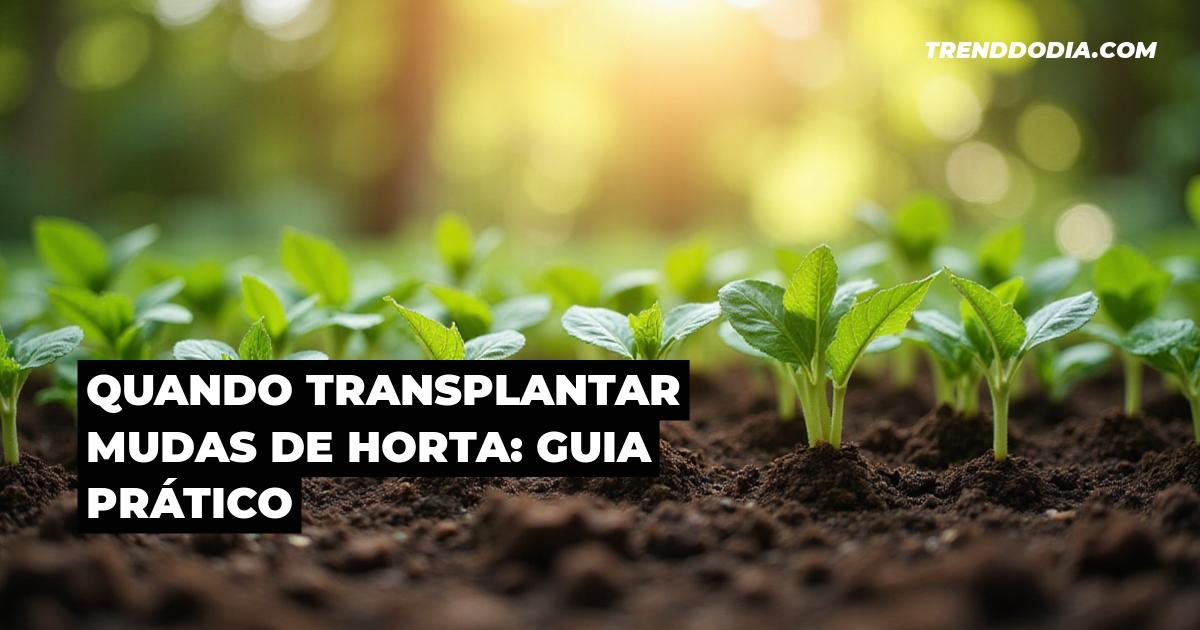
Look, you'll know it's time to transplant your garden seedlings when they have 3 to 4 true leaves, are about 7 to 10 cm tall, and have well-formed roots. This usually happens about 20 to 30 days after they germinate; then you can just transplant them in the late afternoon or on a cloudy day.
If you've ever lost lettuce or tomato seedlings after transplanting, it was probably due to shock. Small details at the right time can make all the difference in plant survival. Let's see, step by step, how to get this right without complications.
How to know if the seedling is ready for transplanting
To know when to transplant garden seedlings, keep an eye out for clear visual signs. But first, remember that these seedlings need to be strong enough to withstand the change in environment. Data from Embrapa shows that well-formed seedlings help avoid unnecessary losses.
In this sense, the quality of seedlings begins in the seedbed. If you want to learn how to produce them from scratch, it's worth mastering seedling propagation. This helps ensure healthy roots before transplanting time.
Furthermore, comparing common species makes understanding easier, especially in home gardens. See the table below for how lettuce and tomato seedlings differ.
| Species | Signs of readiness | Approximate height and age |
|---|---|---|
| Lettuce | 4 true leaves, firm white roots | 8 cm, 20-25 days |
| Tomato | 3 true leaves, thick trunk | 10 cm, 25-30 days |
True leaves, height and appearance of the seedling.
The true leaves are those that come after the cotyledons, the first little leaves. Count at least three of them, with a thick appearance and bright green color, to see if the seedling is at the right stage.
Therefore, the ideal height is between 7 and 10 cm, depending on the species. Shorter seedlings may not have sufficiently developed roots, while very tall ones become thin and soft, a sign that they grew too much in the seedbed.
Firm roots and the right spot to prevent the seedling from growing out of reach.
The roots should form a compact, white ball, without any signs of rot. Gently touch them to feel if they are firm, which indicates resistance to transplanting.
In these cases, avoid letting the seedling go past its prime, such as when the stem starts to turn purple or becomes too thin. This happens with lack of light or space, resulting in weak plants that die easily in the new soil.
When should vegetable garden seedlings be transplanted in each region of Brazil?
The ideal time to transplant garden seedlings varies depending on the climate and region. In Brazil, factors such as sun and rain directly influence success, so adapt to your environment for better results.
For example, mild temperatures help roots establish themselves without stress. In these scenarios, choose times with fewer extremes to avoid frost or intense heat.
And for good planning, consider crop rotation throughout the year. When deciding where each seedling will go, use different garden beds. Practical Guide: How to Rotate Crops in Your Vegetable Garden It offers practical ideas for this.
Ideal time of day and weather conditions
Always transplant in the late afternoon or on cloudy days, when the sun is weaker. This reduces the heat that can burn the tender leaves of the seedlings.
This gives the roots time to adapt overnight without excessive water loss. It avoids sunny mornings, which accelerate evaporation and bother the plants.
Adaptations for the South, Southeast, Northeast, and Midwest regions.
In the South, opt for the beginning of spring to avoid late frosts. In the Northeast, avoid extreme heat and prefer light rains.
In the Southeast and Midwest regions, autumn is good for many leafy greens, with balanced temperatures. Each region requires adjustments, but all benefit from moist soil and fresh air for transplanting.
| Region | Recommended season for lettuce | Adjustments for tomatoes |
|---|---|---|
| South | Beginning of spring | End of spring, avoiding frost. |
| North East | Light rainy periods | Gentle sunshine, after the rain. |
What is the ideal size for a seedling to be planted in a garden bed or pot?
The ideal size of seedlings for transplanting in the garden depends on the type of plant. Leafy greens like lettuce prefer smaller seedlings, while tomatoes need larger seedlings for fruit trees.
Similarly, the garden bed must be prepared to receive the seedling. If it is not loose and fertilized, it may not take root well in the new soil.
Therefore, note simple visual signs to assess the situation. Be careful with very large seedlings, as they become fragile and fall over easily.
Differences between leaf, root, and fruit seedlings.
Leafy seedlings, like lettuce, are ready when they have 3-4 true leaves and an average height of 7 cm. They grow quickly, so sowing doesn't take long.
For root vegetables, like carrots, focus on firm roots before any external signs appear. For fruits, like tomatoes, they need a thick trunk and strong leaves to support the weight of the future tomatoes.
How to avoid very thin or etiolated seedlings
Etiolated seedlings are tall, thin, and have a purple stem, a sign of insufficient light. Ensure they have enough space and direct sunlight from the start to prevent this.
In these cases, pinch off the top if necessary, but it's best to transplant in time. Seedlings like this don't take root well and take a long time to recover.
Simple step-by-step guide to transplanting garden seedlings.
Transplanting garden seedlings can be simple if you follow clear steps. First, prepare the soil to be moist and welcoming, then carefully remove the seedling to preserve the roots.
Secondly, make the holes properly and position everything correctly. Water well after planting, reducing shocks and helping with rooting.
Third, observe during the first few days and water as needed. This basic process works for garden beds or pots in small apartments.
Finally, adjust according to the plant, but always prioritize whole roots. Data from Embrapa indicates that moist soil makes everything easier.
Preparing the soil or pot before transplanting
Before transplanting, loosen the soil and add organic fertilizer. This ensures nutrients and space for the roots to grow freely.
If it's a pot, use a substrate mixed with organic matter. For more details on fertilization, see [link to relevant resource]. How to Fertilize a Home Vegetable Garden for Increased Production.
How to remove and position the seedling without damaging the roots.
Remove the seedling by wetting the tray first; this makes it easier to slide out. Hold it by the base of the leaves, never by the stem, to avoid damage.
Place it in the hole made in the ground, covering the roots without burying them too deep. Firm the soil around it for good contact, then water gently.
How to avoid shock and increase seedling establishment?
Avoiding transplant shock in seedlings means taking care of factors such as water and light. Keep the soil consistently moist in the early stages, but avoid waterlogging.
Protect from harsh weather, especially strong winds. In these cases, use lightweight shade cloth to block excessive sun and wind.
Water early in the morning or late in the afternoon, watching for signs of wilting. Growers in Paraná do this and see more success with lettuce in the summer.
Care during the first 10 days after transplantation.
In the first few days, monitor daily. Water if the soil dries out on the surface, but don't overwater to avoid root rot.
Avoid excessive pruning or handling. Let the plant focus on rooting, only interfering if there are visible pests.
Shade, wind, and protection from strong sun.
Use 30% shade cloth on hot days after transplanting. This reduces heat without blocking light completely.
To protect against wind, position the plants in sheltered locations or create simple barriers like thin wire. This prevents the fragile stems from falling over and breaking.
Common mistakes when transplanting garden seedlings (and how to correct them)
Mistakes like transplanting too early are common and easily kill seedlings. Transplanting before the roots are firmly established causes the plant to weaken quickly.
Solution? Always wait for clear signs. Submerging the stem too deeply is also a mistake, causing waterlogging and root rot.
Cases in Salvador illustrate this with tomatoes: fix them by adjusting the depth and watering less often, but with more light water.
Early transplanting, late transplanting, and excess water.
Planting too early doesn't allow time for roots to form. Planting too late leaves plants stretched, fragile, and susceptible to disease.
Excess water immediately after planting floods new roots. Correct this by watering only when the roots are dry, never every day.
Space problems, tangled roots, and lack of light.
Lack of space in the garden bed causes roots to clump together. Loosen the soil further beforehand.
Tangled roots indicate planting too tightly together. Gently separate the roots and transplant immediately.
Lack of light causes seedlings to yellow. After transplanting, ensure direct sunlight for rapid recovery.
So, in summary, look for true leaves, firm roots, and average height as signs of readiness. Transplant in the late afternoon or during mild weather adapted to your region. Follow the basic steps: prepare the soil, carefully remove the seedling, position it, and water it. Be careful to avoid water shock and provide protection, avoiding mistakes like late transplanting or overwatering. Now, test it on a small scale in your garden, note what worked, and share any questions in the comments to exchange ideas with others who enjoy gardening.